
Emeritus Professor Successfully Derails Talk With Perfectly Valid Question No One Wants To Hear

CHICAGO, IL—Demonstrating a style that colleagues describe as “technically correct but spiritually devastating,” emeritus professor Dr. Harold Finster, 78, successfully derailed another scientific presentation Monday by asking a completely legitimate question that everyone in the room was consciously avoiding because they wanted to enjoy the science for five minutes, sources confirmed.
“Beautiful talk, really beautiful,” Finster said after being called on before delivering a question so valid yet so unwelcome that an audible sigh rippled through the auditorium. “But I have to ask: how are you going to deliver this to every cell in the affected tissue?”
The talk was about a new prime editing strategy that could theoretically cure thousands of devastating genetic diseases. The room had been enjoying the possibility of hope. The hope was now gone.
According to colleagues, Finster has developed an arsenal of approximately eight questions that are technically unobjectionable but function as a kind of scientific memento mori, reminding researchers that they will one day die and so will their research program. Peptide therapeutic? Oral bioavailability. PROTAC? Concerns about the molecular weight and violating the Rule of Five. Novel CRISPR system? Delivery. Covalent modifier? Immunogenicity. mRNA therapeutic? Cold chain logistics. Targeted protein degrader? Freedom to operate. Exciting mouse data? Whether the mouse model recapitulates human disease. Total synthesis of a natural product? “Couldn’t you simply buy it from Sigma-Aldrich?”
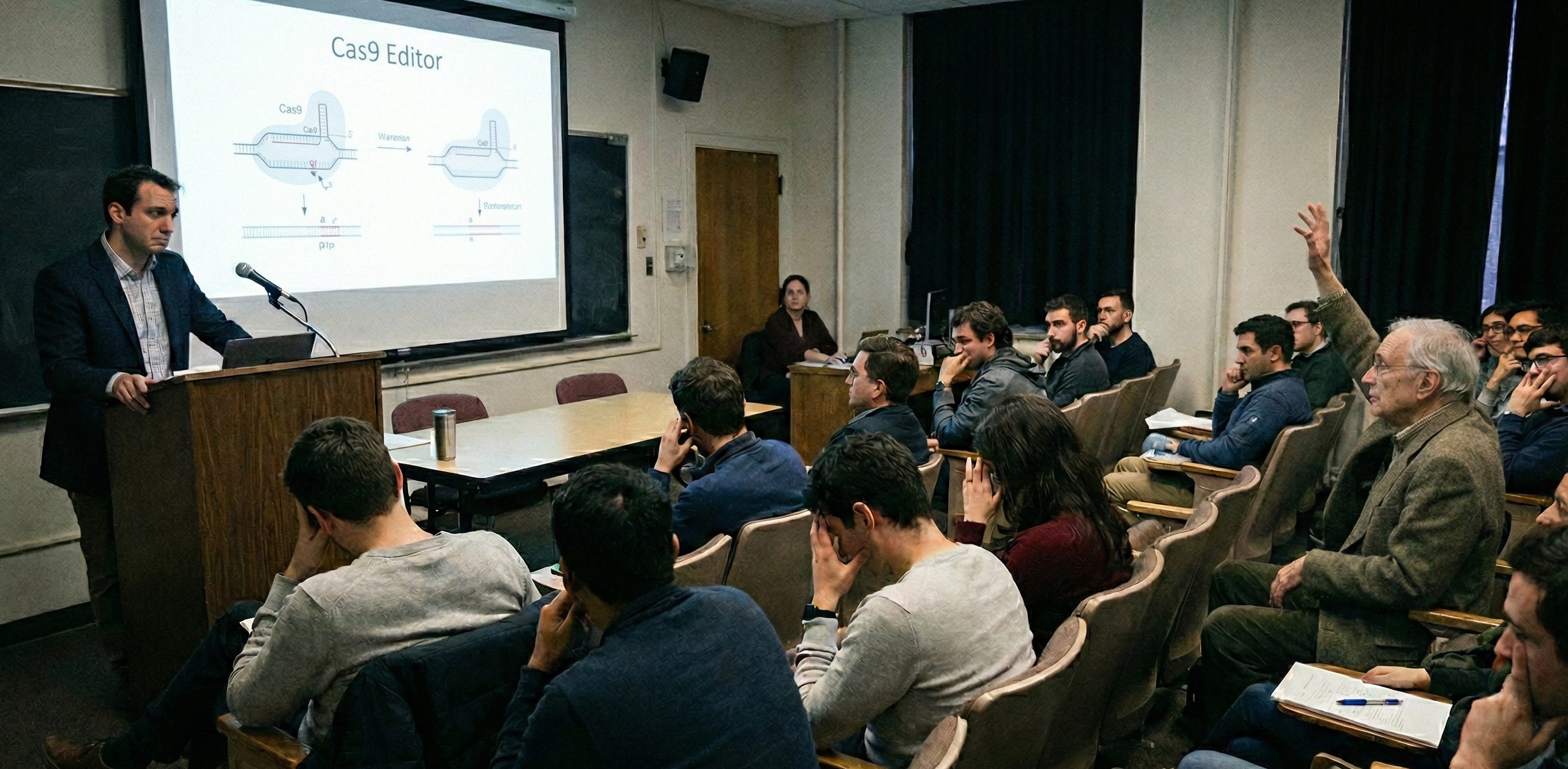
“He’s rarely wrong,” conceded Dr. Jennifer Martinez, a postdoc who has attended seminars with Finster for three years. “That’s the devastating part. He reaches into your chest and pulls out your deepest scientific insecurity and waves it around in front of the entire department. You can’t even be mad. You can only be sad.”
Finster’s most feared technique, sources say, is the question he reserves for talks that have no obvious weakness: “Could you walk us through the limitations of your approach?” Speakers have described the experience as “being asked to dig your own grave” and “like if someone asked you to list your flaws at a job interview except the job interview is your entire career.”
When reached for comment, Finster seemed unaware of his reputation.
“I just ask questions,” he said. “I want to understand how the work translates. Is that so wrong?”
When informed that his questions have reportedly made multiple graduate students cry, Finster appeared briefly contemplative before responding: “Perhaps they should have thought about delivery before starting a gene therapy project.”
At press time, Finster had arrived at a seminar on quantum computing and was preparing to ask when it would be useful for anything.