
NIH Program Officers Build Elaborate Fort Out Of Unreleased Appropriations During Funding Holdup

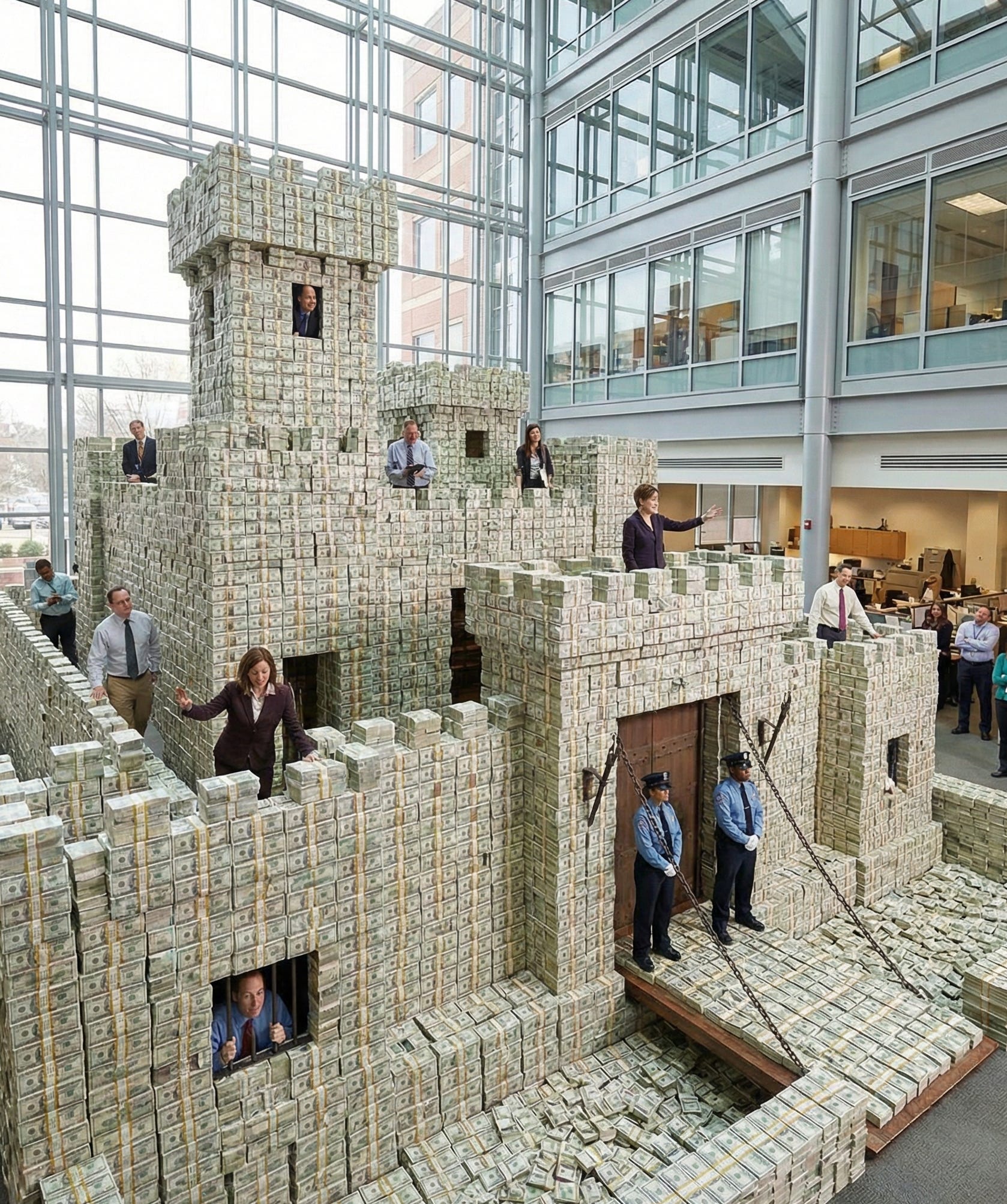
BETHESDA, MD — With grant disbursements stalled indefinitely pending White House approval, program officers at the National Institutes of Health have constructed an elaborate fort out of unreleased appropriations in the Building 31 atrium, sources confirmed Tuesday.
“We call it Fort Appropriations,” said Dr. Michael Tran, a program officer in the Center for Scientific Review, peering out from a turret fashioned from $2.3 million in shrink-wrapped twenties. “Greg wanted to call it Castle Grant-skull, but we voted.”
The fort, which spans approximately 4,000 square feet and features multiple chambers, a drawbridge mechanism, and a working moat (not discussed), reportedly began as a small defensive barrier between two corridors and “kind of escalated” over the past three weeks.
“At first we were just stacking the money to get it out of the way,” said Dr. Linda Okafor, a new CSR program officer, gesturing at a parapet made entirely of bundled fifties. “Then someone built a little wall. Then Greg made a watchtower. Then HR said we couldn’t build a watchtower without filing a facilities request, so we built a second, larger watchtower out of spite.”
The second watchtower is reportedly visible from Wisconsin Avenue.
The fort’s interior includes a great hall constructed from National Heart, Lung, and Blood Institute funds, a quiet reading room built from National Institute on Aging appropriations, and a dungeon that program officers have been using primarily for storage and occasionally to “put Greg in when he’s being annoying.”
Greg, reached for comment inside the dungeon, said the accusation was “unfair” and that he had “only suggested Castle Grant-skull once.”
Scientists awaiting funding have expressed mixed reactions to the fort. Dr. Rebecca Martinez, a neuroscientist at UCLA whose R01 has been pending for eleven months, watched a video tour of the structure posted to an internal NIH listserv.
“I’ve been rationing pipette tips since September,” Martinez said. “I had to let two postdocs go. And these people built a functioning drawbridge out of my grant money.”
She paused.
“It is a pretty good drawbridge, though.”
NIH sources say the fort has improved morale considerably at CSR. Daily activities now include rampart patrol, flag ceremonies, and a recurring 3 PM event called “the changing of the guard,” in which two program officers solemnly trade places atop the main gatehouse for no particular reason.
“It gives the day structure,” Tran explained.
When asked when the funding might be released and the fort dismantled, Okafor shrugged.
“We’ve heard Q2,” she said. “But we’ve also started work on a secondary fortification near the cafeteria, so honestly, we’re not in a huge rush.”