
Scientists From Every Field Agree That AI Will Make Every Other Field Obsolete

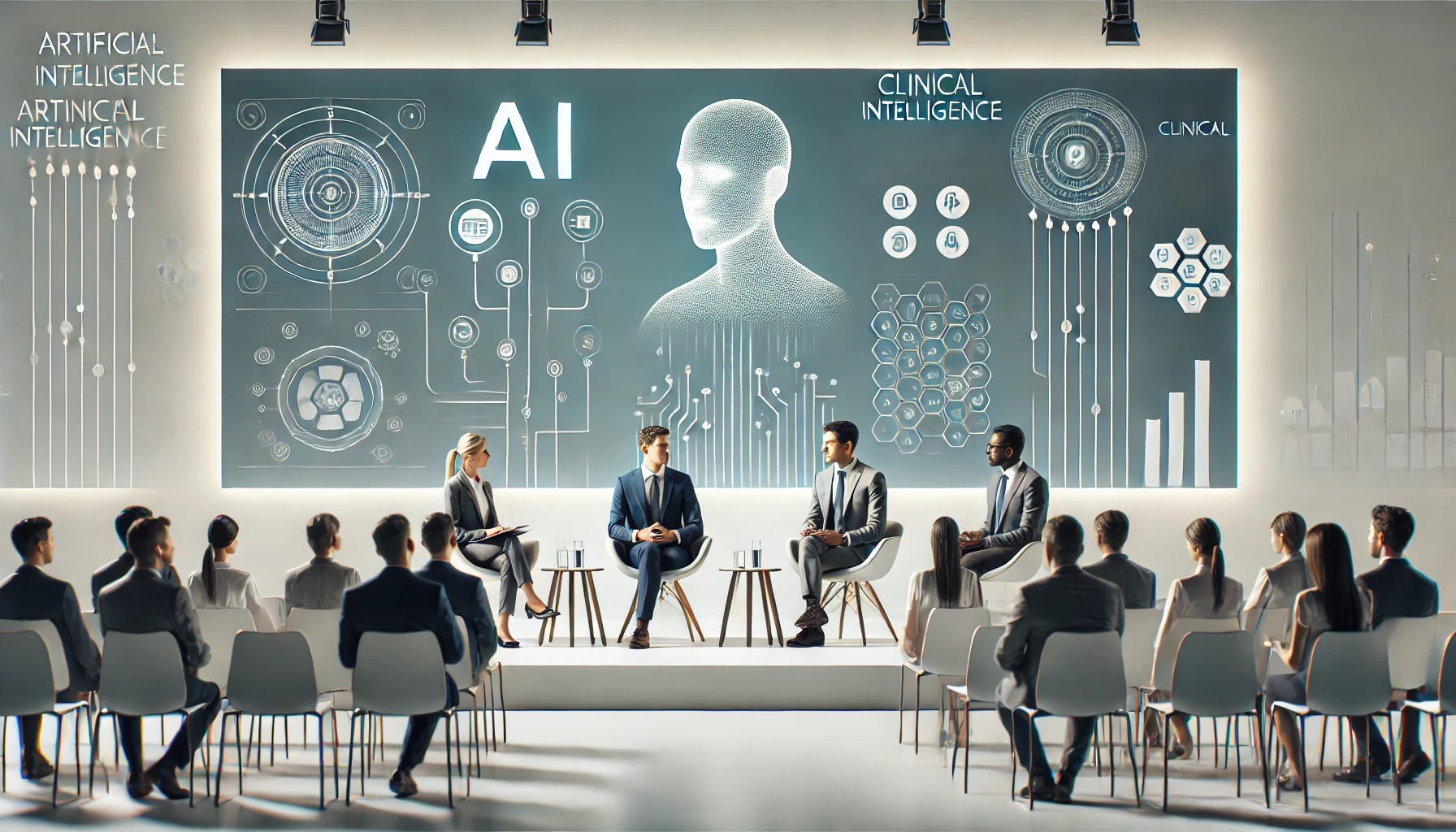
SAN FRANCISCO, CA—In a rare moment of interdisciplinary consensus, scientists from every major field of biomedical research confirmed Tuesday that artificial intelligence has rendered every other field of research obsolete, while leaving their own not only intact but more important than ever.
“Structural biology is entering an interesting transitional moment,” said Dr. James Okafor, a geneticist at the Broad Institute, citing AlphaFold’s ability to predict protein structures without the need for crystallography, cryo-EM, or anyone who has ever purified a protein. He said this with confidence as a structural biologist seated next to him at the symposium (Future of AI in the Life Sciences) nodded politely in the way that a person does when composing a rebuttal.
The structural biologist, Dr. Elena Voss of the Max Planck Institute, agreed that AI had transformed science profoundly, but noted many fields were in transition. “Genetics for example,” she said. “AI can predict variant effects from sequence alone. You don’t need a cohort or biobank. Of course, we will always need computational folks to run the models. In a support capacity.” Okafor’s smile did not change but his eyes did.
A cell biologist at UCSF, Dr. Kevin Nwosu, said he was “excited” about these opportunites, but particularly interested in what was happening organic chemistry. “AI designs molecules now. It plans syntheses. I think med chem is evolving into more of an execution function.”
A chemist from Scripps, Dr. Rachel Park, said "that's very generous" in a way that meant it was not. She noted that foundation models trained on microscopy images could now phenotype cells with remarkable accuracy. "I think there's still a place for cell biologists," she said, and the pause that followed did more work than the sentence. "Especially in generating training data." Nwosu said "we do more than generate training data." Park said "of course. For now."
A mouse geneticist from Columbia, Dr. David Kimura, said that while he respected everyone’s perspective, the honest truth was that AI had transformed all of their fields, while completely destroying the need for mouse genetics. He then corrected himself. “Sorry, I meant it has destroyed the need for fly genetics. Mouse genetics is critical. Mouse genetics will always be critical.” A Drosophila geneticist across the table set her coffee down with a force that several attendees later described as “communicative.”
By the second hour of the symposium, a remarkable pattern had emerged that an audience member described as “a circular firing squad.” Each panelist had identified at least one field that AI had rendered obsolete. Each panelist had also identified exactly one field that AI had made more essential than ever. In every case, it was their own.
The lone AI researcher on the panel, Dr. Neil Prasad from Google DeepMind, watched the exchanges in silence. He was eventually asked which field he believed AI would replace. He said, “All of them, including mine, eventually.” The panel did not engage with this comment.
After the conference, all six panelists returned home and submitted grants arguing that their field was “uniquely positioned to leverage AI,” a phrase that appeared in all six applications verbatim.